By: Diane Kashin, EdD, RECE.
When I started this blog, with a professional friend, the intention was to support professional learning through the use of internet searches and social media. Sadly, the friendship did not last, but the blog is still here! It continues to be a platform to share resources related to early learning based on professional interests. An interest is something you want to know more about. When I wonder about something, I search for answers to questions. This is self-directed learning, but it is not done alone. Musings are sparked by engagement with others both virtual and real. A recent interest has been the BIG IDEAS of light. Learning was illuminated by collaborating with a friend and by engaging with Artificial Intelligence (AI)!
What is your professional interest? How do you pursue it? Lev Vygotsky emphasized the role of social interaction and cultural influences, suggesting that we acquire knowledge and skills through others. I believe it is through others that we develop into ourselves. In the case of this blog post, the other is virtual. Full disclosure – this blog related to my pondering about professional interests, intelligence and knowledge was co-constructed with AI! I engaged with Chat GPT, a text-based product where the user enters instructions, prompts and/or questions in the process of a chat to create content.
Professional Friendship and Mentorship
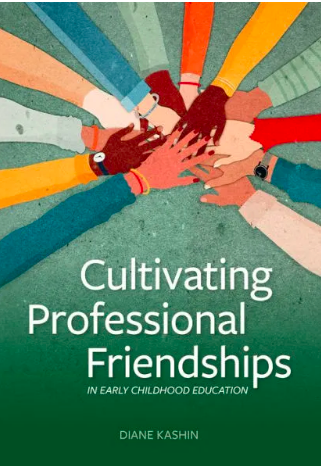
I have long been interested in mentorship in early childhood education as one who has been both a mentor and a mentee. Writing the soon to be published book, Cultivating Professional Friendship in Early Childhood Education, offered an opportunity to reflect on the ways the concept of friendship intersects and interacts with mentorship. I am thinking that everyone could have access to a professional friend but having a mentor is not as accessible?
As I interact back and forth with the virtual entity that is AI, I am wondering, is it a professional friend? Or is it a mentor? Can it be both? In my interactions with AI, what is my role? Think about these questions as you read the following AI collaboratively written content on professional interests and knowledge.
Unveiling Professional Interests: Professional interests serve as guiding stars, igniting our passion, and driving our pursuit of knowledge. From emergent literacy to play-based learning, each of us carries a unique set of interests that shape our professional path. These interests propel us forward, urging us to explore, inquire, and deepen our understanding of the diverse dimensions of early childhood education.
Nurturing Our Expertise: When I started chatting with AI, I provided questions and prompts. On professional intelligence, AI suggested that it nurtures our expertise. As an early childhood educator, I can relate to the concept of nurturing, because it describes the care, support, and encouragement we provide for the growth, development, and well-being of children.
Professional Intelligence as the Engine: AI suggested that this is what propels our growth and development as educators. Professional intelligence encompasses the amalgamation of our experiences, reflections, and the application of our professional knowledge in real-world contexts. As early childhood education professionals, our intelligence is honed through critical thinking, problem-solving, adaptability, and the cultivation of meaningful relationships with children, families, and colleagues.
The Power of Professional Knowledge: At the core of our professional practice lies the foundation of professional knowledge. This knowledge encompasses a rich tapestry of theories, research, practices, and pedagogical approaches. It equips us with the tools necessary to understand child development, create engaging learning environments, and foster positive relationships. Professional knowledge provides the framework upon which our intelligence and interests can flourish.
Enter Artificial Intelligence: AI stands at the forefront of rapid technological advancement, offering opportunities to transform our professional journey. By embracing AI, we can navigate the vast sea of knowledge, engage in deep reflection, and forge meaningful connections with fellow educators.
- AI as a Knowledge Navigator: AI-powered algorithms and search engines curate relevant research, articles, and resources tailored to our professional interests. It acts as a trusted guide, unveiling the latest findings, emerging trends, and innovative practices in early childhood education.
- AI as a Reflection Partner: Artificial intelligence enhances our self-reflection and growth as educators. Natural Language Processing algorithms analyze our reflections, plans, or documentation, providing insightful feedback and suggestions. This AI-enabled reflection partner helps refine our pedagogical approaches.
- AI as a Collaborative Companion: Through AI-powered platforms, we engage in discussions, share ideas, and collaborate on projects aligned with our professional interests.
- Embracing AI’s Transformative Potential: We have the opportunity to shape the future of early childhood education by embracing AI as a catalyst for growth, innovation, and transformative change. While AI holds immense promise, we must never overlook the invaluable role of human interaction, expertise, and intuition.
AI should be seen as a tool that enhances our learning journey, expanding our knowledge and supporting our professional growth. Navigating the AI road ahead, is uncharted territory. Can we embrace the potential of AI while still valuing the human connections that enrich our professional lives? AI is not a replacement for human engagement and experience. However, in the spirit of technology rich inquiry-based research, I think this won’t be the last time that I use AI in my work. I realize as a retired early childhood education professor that there is much to consider going forward. Within those hallowed halls that I am no longer a part of, I can imagine there are some heated discussions about AI amongst early childhood education faculty! In my current role, I am looking at the use of AI as a resource to support professional learning. What do you think, fellow humans? Are you using AI? How are using it? If you are not using it, do you think you might try it? Please share your thoughts as there is no substitute for that!
 Technology Rich Inquiry Based Research
I’m fascinated by this article. Before reading it AI didn’t even scratch the surface for me as an interest. I’ve been just rolling my eyes and ignoring it as irrelevant. Not a great place to be, but with all that calls our attention as early childhood professionals this just seemed to be another thing. And then this blog… How you’ve written about AI is intriguing and surprising to me. I wonder, if I wanted to dabble in exploring what this is (or could be), how would I even try that? Where can I dip my toe in to start exploring this possibility, so my thoughts are based on lived experience not just my armchair thoughts?
LikeLiked by 1 person
AI has massive potential in the overall field of education, business, the arts etc. a component of AI requires the individual to respond critically to content creation. Critical thinking and self reflection rather than reflection are tools that hone our knowledge, skills, and attitudes. The piece that intrigued me in the blog was use of the word ‘trust’ Within the realm of self reflection there may be a component of critical thinking and content where trusting one’s own judgement may come into play.
On the flip side AI may provide us with valuable information about trends, themes within research that may be of interest. I wonder if AI may disrupt our thinking or transform coding data collection – whether hand coding or digital coding platforms.
AI may have the potential to open the doors of communication when discussing observations and transform documentation practices. AI may give professionals the tools to effectively pinpoint categories, trends, etc but there are ethical questions in the professions of education and care we may need to address.
LikeLike
Lots to think about – thanks for this. I think that, as faculty, our first response to AI is often that it will be used for nefarious reasons that might lead to plagiarism or cheating, however, it is helpful and hopeful to look at it as a useful tool. Your post inspires me to look at AI differently. It will likely take me a while to figure it out but I can look to my students to help me with that.
LikeLike