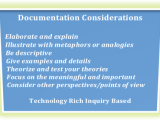
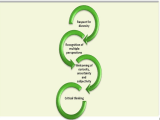
By: Diane Kashin, Ed.D, RECE. I have been thinking about pedagogical documentation and specifically learning stories. Learning stories are based on the work of Dr. Margaret Carr and Wendy Lee of New Zealand. I first heard about learning stories about ten years ago at a conference that featured Margie Carter and Deb Curtis from Harvest Resources … Continue reading
Tagged with inquiry …
A Thinking Continuum: A Search for Complexity in Early Childhood Education Practice
By: Diane Kashin, Ed.D, RECE. Pondering about early learning is something that I do on a regular basis. Usually what motivates me are stories from colleagues and friends or posts shared on Facebook, Twitter or Pinterest, as most of my friends and followers on social media are educators. I could talk for hours with anyone … Continue reading
Creative and Critical Thinking: Documentation meets the Digital Age
By: Diane Kashin, Ed.D, RECE. One of the benefits of embarking on a journey of self-directed professional learning is the unexpected consequences of stepping outside your comfort zone. Four years ago, I was pushed into a state of disequilibrium by a group of students who encouraged me to take a look inside the unfamiliar world … Continue reading
Playing and Learning: Our Second Nature
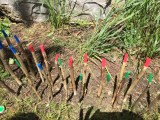
By: Diane Kashin, Ed.D, RECE. Looking at the photo below, that my cousin sent me recently, I found myself thinking about the past and my early outdoor play and learning experiences. I remember as a very young child having great times playing outside without structure and without supervision – making mud pies, playing in the … Continue reading
Buttons as Loose Parts: The Intersection of Play and History
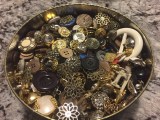
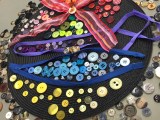
By: Diane Kashin, Ed.D, RECE. As I child I remember playing with my mother’s button collection, dipping my hand in, smooshing them about, dumping them on the floor of my bedroom and then playing for hours. Sometimes, I counted them, or sorted them, but I also remember creating elaborate stories with the buttons representing different … Continue reading
The Colour of Learning: A Reflection on Reggio, Constructivism and Provocations
By: Diane Kashin, Ed.D, RECE. Recently, I have been provoked to think and reflect about colour. I have always known that colour impacts learning and that there is a psychology behind colours. Having just moved into a new townhome that I waited two years for the builder to finish, I spent considerable time thinking about the colour … Continue reading
Models and Approaches to Early Learning: Where is the Play and Inquiry?
By: Diane Kashin, Ed.D, RECE. There are many perspectives on philosophies and theories and how they should guide early learning practice. Program models and approaches have been been influenced by historical, contemporary, and postmodern views of children, families, and learning. The many program models and approaches in practice in the early learning world are complex in … Continue reading
Emergent Curriculum: Taking Interests to the Next Realm – Cultivate rather than Follow
By: Diane Kashin, Ed.D, RECE. I have written about interests in an earlier blog post. I find interest-based teaching and learning to be so interesting! My interest propels me to think deeply and explore resources and ideas about interests. While some may think that interest-based education is a new concept, it is firmly rooted in the past, as … Continue reading
From Themes to Emergent Curriculum: Facing the Resistance to Change with Kindness and Compassion
By: Diane Kashin, Ed.D, RECE. I spent a number of my formative years as an early childhood educator working in a community based child care program. I worked collaboratively with the other teachers and the administration team. We had a culture of mutual respect and I felt valued as a member of the community. However, … Continue reading
Cut Out the Pre-Cuts: The Trouble with Themes in Early Childhood Education
By: Diane Kashin, Ed.D, RECE. With the start of another school year, early childhood programs, are once again faced with choices – to theme or not to theme? Themes are like worksheets, they represent a school model. I have written about worksheets in previous posts from both a mathematical lens and a literacy lens. I admitted … Continue reading