By: Diane Kashin, EdD, RECE. One of the joys of being an early childhood educator is that we get to look at the world through the eyes of a child, every single day. Look at everything as though you are seeing it for the first time, with eyes of a child, fresh with wonder ~ … Continue reading
Tagged with inquiry …
Back in Time: The Value of Vintage Resources for Play in Early Childhood Education
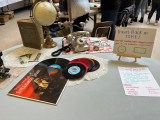
By: Diane Kashin, EdD, RECE. Vintage materials are valuable play resources! There is value to vintage. They remind me about what is important. They give me pause to think deeply about values and what it means to value. Values are the regard that something is held to deserve. Values are the importance of something. To … Continue reading
Cultivating a Culture of Friendship in Early Childhood Education
By: Diane Kashin, Ed.D., RECE. How do the words of Vivian Gussin Paley translate to now? When Paley listened to children their conversations inevitably focused on fantasy, fairness, and friendship. Are these the current themes in the lives of children? Will we hear them when we listen? My grandson, Griffen missed his friends during the … Continue reading
Webbing Wonders: Mind Mapping in Early Childhood Education
By: Diane Kashin, Ed.D, RECE. Connecting to early childhood educators is at the core of my practice. Making connections is central to my being an early childhood educator. Pre-COVID, I would be making time to visit child care programs to learn from those who are working directly with children. I really miss being where the … Continue reading
Elevating Early Childhood Educators by Going Beyond Questions to Reflective Inquiry
By: Diane Kashin, Ed.D, RECE For my entire career in the early learning sector, I have been focused on how to support others to update outdated practices with the goal to improve day to day interactions with children and their families. Early on I approached this professional goal with bluntness and judgement. Now I recognize … Continue reading
Questions, Questions, Questions! Why Asking Them is Important for Early Childhood Educators
By: Diane Kashin, Ed.D, RECE. Questions can be a wonderful way of supporting children’s thinking, theories, and emerging interests. On the other hand, they can be used to test children’s memory and can end up stifling their language development. Open-ended questions are developmentally more appropriate than closed-ended and testing questions. Open-ended questions are questions that … Continue reading
To Theme or Not to Theme: That is the Question
By: Diane Kashin, Ed.D, RECE. When I first started work on my doctorate, about twenty years ago, I was determined to remain true to my early childhood education roots and to focus my research on issues that connected to my context of early learning. I wanted my research to reach early childhood educators to build … Continue reading
A Seasonal Pedagogy: Documenting Stories within Stories
By: Diane Kashin, Ed.D, RECE. Stories spiral in and out of my mind when I visit the pond near my house. These stories are woven together by threads of relationships. There are stories within stories that relate to my professional and personal growth in my final season. The pond is the backdrop to a documented … Continue reading
Continuous Professional Learning for Early Childhood Educators: Reflective Practice and Collaborative Inquiry
By: Diane Kashin, Ed.D, RECE. When I started this series focused on the six pedagogical approaches of How Does Learning Happen? Ontario’s Pedagogy for the Early Years (2014) it was my way of giving back to early childhood educators who were looking for professional learning opportunities during quarantine especially those in my home province of Ontario, … Continue reading
Continuous Professional Learning for Early Childhood Educators: Learning through Exploration, Play and Inquiry
By: Diane Kashin, Ed.D, RECE This is the third blog written during self-isolation imposed by the spread of COVID-19, intended to support early childhood educators committed to continuous professional learning. It is the second in a series focused on the pedagogical approaches from Ontario’s pedagogy for the early years: How Does Learning Happen? (2014). The … Continue reading