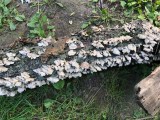
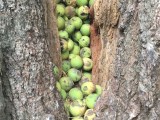
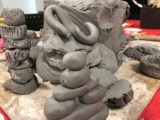
By: Diane Kashin, Ed.D, RECE. and Laura Salau, RECE. To early childhood educators around the world, but especially to those in our province, Ontario, Canada, this blog post is designed to support your continuous professional learning. It is the fourth post in a series focused on the pedagogical approaches from How Does Learning Happen? (2014). These approaches … Continue reading
Filed under Emergent Curriculum …
Continuous Professional Learning for Early Childhood Educators: Learning through Exploration, Play and Inquiry
By: Diane Kashin, Ed.D, RECE This is the third blog written during self-isolation imposed by the spread of COVID-19, intended to support early childhood educators committed to continuous professional learning. It is the second in a series focused on the pedagogical approaches from Ontario’s pedagogy for the early years: How Does Learning Happen? (2014). The … Continue reading
Blocks for Days: Block Play and Learning
By: Diane Kashin, Ed.D, RECE and Cindy Green, BSc, RECE. Block play is centuries old. Blocks were part of a historical movement that focused on building a child-centred culture that began in the late 1700s (Dietze & Kashin, 2019). There was John Locke (1632-1704), the English philosopher who recommended the use of alphabet blocks for … Continue reading
The Image of the Early Childhood Educator: Learner, Researcher and Innovator
By: Diane Kashin, Ed. D, RECE. When I was a teenager, my career goal was to be a high school history teacher. At a time of declining enrolment, the goal could not be achieved and instead I chose a different path after university. I found office jobs which I hated and wasn’t that good at, … Continue reading
2020 Visioning in Early Learning: My One Word for the Year
By: Diane Kashin, Ed. D, RECE. This past year has been a difficult one for me. Early in 2019, I was diagnosed with breast cancer. Between surgery, chemotherapy and radiation treatments, my year was about healing and recovery. Normally, I would have been traveling and presenting workshops to the early learning community. I missed this … Continue reading
Thought Provocations: The Teacher as Provocateur
By: Diane Kashin, Ed. D, RECE. Recently I wrote a provoking post about provocations that has continued to stimulate thought on the role/image of the teacher. As provocateurs, teachers are in a position not to make learning “smooth or easy for children, but rather to stimulate it” by making it “more complex, involving and arousing” (Edwards, … Continue reading
Sparking Inquiry from Children’s Emerging Interests
By: Diane Kashin, Ed. D, RECE. My last blog A Provoking Post on Provocations garnered some great comments and Twitter conversations that have sparked deep thinking about the process of pedagogy and curriculum in the early years. When I began my career as an early childhood educator I was fascinated by planning and programming. I … Continue reading
Show and Tell: Tell Me Why, Tell Me Why Not?
By: Diane Kashin, Ed. D, RECE. I am a member of countless early childhood education groups on Facebook. I learn so much from members from around the world. Recently, a photo appeared in one of these groups that depicted a plastic bin, decorated with coloured shapes and labelled “Show and Tell”. The text that went … Continue reading
Sensory Play Goes Beyond the Basics
By: Diane Kashin, Ed. D, RECE. I have written about early childhood education basics such as blocks, art and dramatic play before. By basics I mean that these are experiences that are essential and should be commonplace in every early learning environment both indoors and outdoors. By no means though, are these experiences simple. Rather, … Continue reading
Letting Nature Take the Course: Finding Our Rhythm in Early Learning
By: Diane Kashin, Ed. D, RECE. It was in 2015 that the York Region Nature Collaborative offered the first Rhythm of Learning in Nature which is an opportunity for like-minded educators to come together to experience nature in dialogue with the Reggio Emilia Approach and influenced by forest school practices and Indigenous ways of knowing. … Continue reading