By: Diane Kashin, Ed.D, RECE. and Cindy Green, RECE. It has been almost two years since Cindy and I spent a wonderful few days collecting loose parts with intention to share at a conference with 400 Upper Canada Child Care educators but over twenty-five years since we first started our dialogue about loose parts. Loose parts are materials that are open-ended and can be used in multiple ways. As colleagues teaching early childhood education at a community college, we found so much joy in our discussions and learned so much from each other while sharing ideas and loose parts. The learning has not stopped nor have we as even in our retirement years, we find ourselves busier than ever with workshops, consultations and training sessions. Over the last few years, more and more educators are excited to learn more about loose parts but we are cautious that this loose parts movement is not restricted to the indoor environment as we have learned how important loose parts are for outdoor and adventurous play. In this blog post, we are both going to share more of our learning around the topic of loose parts.

We are excited about the two upcoming workshops; the Adventure Playground Pop Up on August 8th and A Tapestry of Learning: Materials, Invitations and Installations on August 12th because we know that we will have the opportunity to play and mess about with loose parts outdoors and indoors with others. So much loose parts learning comes from hands-on manipulation to explore the properties of materials. We are grateful for the continued support of Louise Kool and Galt as suppliers of loose parts and are thrilled to announce that if you share your loose parts learning in the comment section of this blog you will have a chance to win this heuristic play starter set for toddlers.

We will each share some recent significant learning about loose parts then we open the door to you the reader, to share your learning. Inevitably in the workshops that I deliver together with Cindy or alone, participants ask about loose parts for infants and toddlers. To provide the most informed answers I have been doing some research. When searching online the term heuristic play keeps popping up. This is not a term that I was very familiar with and looked to learn more. Heuristic play is when one experiments with objects to discover possibilities. It is a term very common in the United Kingdom but not used often in our Canadian context. It was coined by child psychologist Elinor Goldschmeid in the early 1980s. The word ‘heuristic’ comes from the Greek word ‘heurisko’, which means to discover or reach understanding (Goldschmeid & Jackson, 1994). Heuristic play refers to the exploratory play of toddlers with objects. The goal is to discover what can be done with the object or objects. Often the objects are placed in baskets by adults and referred to as treasure baskets. Throughout all ages, any activity, which involves experimenting, can be described as heuristic as it starts in toddlerhood and continues throughout the lifespan (Hughes, 2015). Auld (2002) identified five principles of heuristic play.
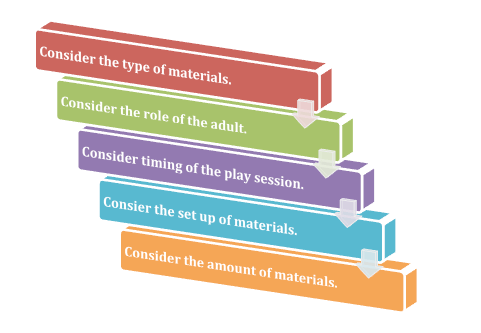
When these principles are followed, even infants and toddlers can explore loose parts. It is a type of play that lends itself to being child-led and offers multiple opportunities for discoveries. At any age there is something very profound about self-discovery. Moustakkas (1990) developed the methodology of heuristic research as a process of internal searching to discover the nature and meaning of experience. The process is dynamic, creative and leads to self-discovery and self-knowledge. Discovery is important at any age. Discovery leads to learning and that sums up my recent learning about loose parts. Cindy will now jump in with hers!

I am often asked about loose parts and safety as it relates to toddlers engaging with loose materials. Thinking of the five principles of heuristic play described above, all would be considered when deciding on the size and quality of potential loose parts invitations. Moving away from a “one size fits all” mindset, each child owns their own competencies at the moment and they are capable of learning that these are not suitable materials for exploring with their mouths. Begin with a few, present them intentionally and time the experience so you can be there to support the child’s playful engagement. I too am excited about the two upcoming workshops; the Adventure Playground Pop Up on August 8th and A Tapestry of Learning: Materials, Invitations and Installations on August 12th. During both experiences, educators will be invited to engage with loose parts both indoors and outdoors. When I think of loose parts and outdoor play and those who will most likely engage, my excitement and interest is on high alert! I immediately wonder about what loose parts, why these ones and for what intention?
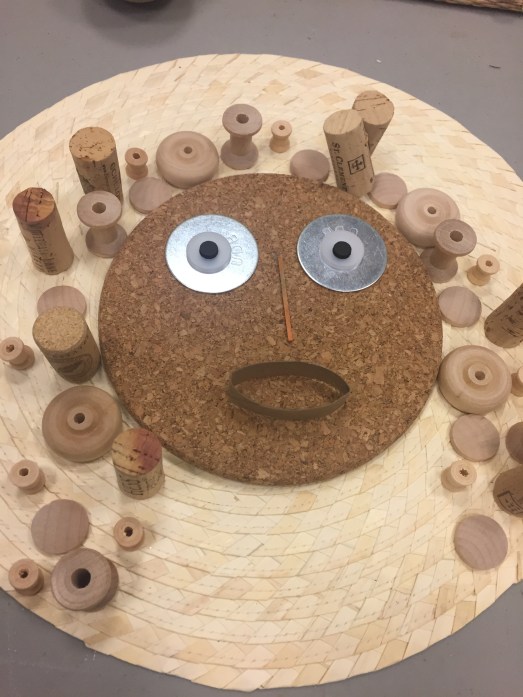
Rather than run to the dollar or hardware store as a first measure I slow myself down and wonder how I can resource and recycle materials, ultimately keeping them out of the landfill site. I have been known to approach “everyone and their uncle” to gather my collections. Once I have sourced out and upcycled then its time to see what I have left to invest in. That brings me to the issue of storage. In my experience, I have never met educators in any program who think that they have too much storage! Loose parts, like all materials need their own space and place during play and otherwise. Many children love transporting things about the space, especially materials that they find heavy. Carting heavy loose parts (logs, tubes, spools, rocks, interlocking bricks) in and out of the storage shed helps children feel grounded and purposeful.

Photo Credit: Many Thanks to Gill Robertson
My final thoughts bring me back to when we first began learning about loose parts. Another colleague and I were so excited and very much caught up in wanting to know everything we could about loose parts. We would pick up various items and run to Diane asking her “Is this a loose part, a tool or just a material”? Could a wooden spoon be a spoon and a loose part? Thank you to Diane for helping us learn that this is about the theory of loose parts. If the child chooses to play with it in a creative and open-ended way, if the material doesn’t dictate the shape of the subsequent play then it becomes a loose part. And, a number of years later, I was introduced to schema play (repeated play behaviours and ways of thinking) and how the open-ended nature of loose parts can support transforming, positioning, enclosing, enveloping, rotating , transporting , connecting, disconnecting, orienting and trajectory Understanding schema play has enabled me to really see bigger ideas inherent in children’s play. I have NEVER looked back!

Photo Credit: Many Thanks to Gill Robertson
While my learning about schema play is more recent, I too will NEVER look back! Thank you to Cindy for helping me learn about schema play and the connection to loose parts. It is so important to be open to learn from others! Cindy and I invite you to share your loose parts learning – what would you describe as your most significant discoveries about loose parts? Please add to the comments to be eligible to win the heuristic play starter kit giveaway. The draw will take place at the end of August. Thank you in advance for sharing your learning and good luck!
 Technology Rich Inquiry Based Research
Great article. I love loose parts as an infant teacher. There is a great resource book out by Red Leaf Press.
Loose Parts 2:inspiring play with Infants and toddlers by Lisa Daly, Miriam Beloglovsky.
LikeLike
Yes we know the book!
LikeLike
It is with pleasure that educators explore loose parts before offering opportunities for children. Treasure baskets are great beginnings for our collections of loose parts. Ask a ladies church group to start collecting for you. You can’t even imagine what they offered up to me. Give it a try!
LikeLiked by 1 person
Good idea Tracy!
LikeLike
Love this article-thank you so much for your motivation and inspiring post-love love love me some loose parts❤️🙌🏽
LikeLike
What is it that you and the children love about these materials?
LikeLike
Thank you for inviting us to dig deeper in our understanding of the minds of children, play and the value of loose parts. To be in a community of learners is in itself both engaging and inspiring.
LikeLike
Hello, Cindy and Diane! One of of my significant discoveries about loose parts, as you well know, is the endless imagination and freedom not only for children but also for the grownups. As children explore with loose parts, and as grownups step back (REQUIRED) to promote exploration, independence, and confidence for the children, ideas and solutions (and maybe conflict, too) arise that grownups may never have imagined. Not to mention the potential of inner calm. Thanks for this fun opportunity!
LikeLike
Good luck!
LikeLike
This is one of my favorite topics mostly because it’s directly connected with dialogue. Materials generating ideas, ideas in search of materials. I wish teachers wouldn’t restrict these opportunities to the young ones only because I’ve witnessed beautiful things coming from a writers workshop in which children interacted with materials. The stories were wonderful. I’ve been interested in apps that somewhat play the loose parts role. Applications that generate an idea, an idea in search of an application.
LikeLiked by 1 person
Loose parts are the BEST!!! Im with Cindy, I try as much as possible to resource my loose parts by recycling or from thrift shops. When I’m driving my eyes are on high alert on garbage days.
LikeLike
You rock Lisa!
LikeLike
This article is really great. It’s great to have ideas on collecting loose parts. It’s the simple things in nature that can help children explore and create.
LikeLike
I enjoyed reading this article. Some things I just learned and will take with me is “treasure baskets” I am certain my students will love using this to refer to loose parts, i will adopt this for this coming school year. Also I would love to continue my learning on the heuristic methodology, I think that keeping the five stages at the forefront of planning will make it more clear to me and my students.
One thing I have yet to learn (I’m only in my 3rd year of FDK) when setting up loose parts to provoke play and learn is the hope to trigger and inquiry? I’d love some learning about this.
LikeLike
What board are you with???? We’d love to offer a workshop on inquiry!
LikeLike
Great article! I have been e plowing with loose parts in my classroom and professional development with teachers. I have found when children and teachers are exposed to these type of materials magical things happen. We all learn together, our minds open and we strengthen relationships. Traditional teaching has evolved into learning, living and loving each moment and each day.
LikeLike
Yup!
LikeLike
We love the flexibility of loose parts. Our young artists use them to create masterpieces. Our mathematicians use them to pattern, count and explore number combinations. Our techies plan and build. Clean up can be a bit discouraging at times as some of materials become so blended. We wonder how much is too much? How often should we switch out materials?
LikeLike
Thank you for providing information about heuristic play. Love the ideas and inspiration!
LikeLike
I looooove this!
If I don’t win, can you please tell me where I can get those wooden open circle?? I’ve been wanting them for so long but can’t find them. Thanks.
LikeLike
Great article and wish I could be at the PD in August. I’ve used loose parts in my classroom for a few years but now that I have my daughter I see it in a whole different light. Watching her explore, she continues to amaze me on a daily basis. The book Loose Parts 2 has been very helpful too as I really had no experience with loose parts below Kindergarten.
LikeLike
Hi Julie. Your daughter is one lucky girl!
LikeLike
This is amazing great article!
LikeLike
Excellent read!
One of my goals this year is to enhance learning through play in my classroom by incorporating the use of a wider variety of loose parts. I was very intrigued by the term “heuristic” as I had never heard the term before. Thank you so much for explaining what it means. I will be spending part of my summer hitting up everyone I know for amazing loose parts for my classroom. This giveaway is amazing!!
LikeLike
I love to hit up my local Restore for cheap parts like door knobs and hinges. So much value added to our block area!
LikeLike
Great article! Thank you for sharing this…very helpful!
LikeLike
What a beautiful giveaway! Fingers crossed at winning these to bring back to our centre with the possibility of sharing with other colleagues in our classrooms! Last week we went for a neighborhood walk and brought magnifying glasses along with us (our group of 3 educators/ 18 senior preschoolers…the children got to take a closer look and asked to bring back some of the natural loose parts we had collected to continue exploring ( bark, moss,twigs,flowers etc etc.) They each chose something that was of interest to them…these would be something new for them to have a look at ! Eeeek so exciting.
LikeLike
Good luck Rebecca and thanks for joining in the conversation!
LikeLike
I was a slow convert to loose parts for my kindergarten classroom, mainly because I had yet to understand 2 of the principles identified in the article; presentation and quantity of materials. I’m now on the lookout for new ways to incorporate loose parts into my program.
LikeLike
I was a slow convert to loose parts for my kindergarten classroom, mainly because I had yet to understand 2 of the principles identified in the article; presentation and quantity of materials. I’m now on the lookout for new ways to incorporate loose parts into my program.
LikeLike
Hi Heather. Good to hear from you!
LikeLike
The biggest learning for me has been the idea that anything can be a loose part. I’ve learned to look around me differently and pay attention more closely. I now collect anything and everything … Lids especially have become a favourite… Caps, lids, dried out marker lids. Teaching my mom about this has added to my collection finding shower curtain rings, napkin rings, corks, washers, pieces from old games. I look at everything with a new eye!
LikeLiked by 1 person
Another fantastic blog post about loose parts! I am always excited to see where children’s curiosity will lead them in exploring, engaging and interacting with loose parts and each other. Is there anything better than a loose parts idea spark to get children working together?! I am definitely going to share this blog post with the ECEs and child care centres I work with! So many wonderful nuggets of information – especially by those struggling with, or feeling overwhelmed by, loose parts and how to incorporate them in their classes. Thank you again for all your wisdom and insight!
LikeLike
I love watching children play with loose parts! Loose parts engage children for a longer period of time then toys with pre-eminent uses. Loose parts also do an amazing job of encouraging the individual child’s creativity and imagination to come out, whether they are playing by themself or with other children.
LikeLike
What an inspiring article.
I constantly collect loose parts in order to recycle and reuse. I collect nature’s loose particles as well.
My toddlers love their baskets of them and use their imagination and surprise me everyday. Like getting a metal lid and using magnetic sticks. they play, walk, carry them every where.
This set would be an amazing addition.
LikeLike
I love your blogs and glean so much from your research and ideas.
Loose parts are such an integral part of any early learning environment!
I hope that teachers in higher grades, will come to see the value and beauty in loose parts, and incorporate them in their curricula.
LikeLike
We started using loose parts more this past year. We invited students to make faces using loose parts and then we talked about what those faces were feeling and how they knew. We borrowed a set like you are giving away and it was amazing what the kids could do with it.
LikeLike
I am part of an early years team in the U.K., working in a Reggio-inspired setting. We endorse an enquiry-based approach to learning and are keen to learn more about loose parts. Around 80% of our cohort speak English as an additional language so the visual, practical nature of loose parts fits well with our circumstances and ideology.
Through our work with loose parts, we have discovered the importance of playing with the materials ourselves first before introducing them to the children. To come at the materials fresh, as a child would, helps us as a team consider a small part of the web of possibilities offered by the materials.
I really enjoy reading these blog posts. They always make me re-think our pedagogy from another perspective. Truly inspiring stuff!
LikeLike
We just finished our first Nature Camp. One day we brought our bucket of various sizes of material and crocheted pieces out to play in the forest. While I’ve done this before, because we had a mix of 5-9 year olds, there seemed to be an engagement and creativity with them that I hadn’t seen before with my K students. Assorted material + forest loose parts + forest = great fun!
LikeLike
Hi Heather. Good to hear from you!
LikeLike
I love gathering loose parts from thrift stores, artsjunktion, or interesting smaller shops (especially in Chinatown). Loose parts definitely have a place in all early learning environments – and it has been interesting to watch and see what my group of very diverse little learners decide to do with them. They also (if sources “cheaply”) can be ideal to adapt to create an experience for a very unconventional learner
LikeLike
I think that learning about the potential of loose parts in a Kindergarten environment is just another step in letting go of control and handing the learning back to the child. When I first introduced loose parts they were at their own centre, where I expected them to stay. Looking back now, that seems so silly. But that is part of my journey. I know see the various loose parts travel about my classroom to be incorporated into the building of structures and to facilitate dramatic play. Loose parts become ingredients in soup, decorations for playdough cookies and birthday cakes, they become money, they become costumes and props. I still offer them to children in an organized and inviting manner, often with an intentional question or provocation, but then I always step back. Sometimes my invitation inspires them to engage as I had imagined and many times it does not. Now that I understand schema play I can wander around and observe (and document) in what way children are using the materials and it is easier to see their development. Sorting them and organizing them at the end of the play engagement is a wonderful way to observe math skills. There is usually one child in the group who chooses to lead with sorting. I had one group of girls (occasionally joined by a boy) that throughout the year would create homes and families using the loose parts. They added paper drawings that they would cut out, and often some labels. They returned to this same kind of play over and over. The settings they created served as a backdrop for continued role play of family and friends characters where they practiced important social/emotional skills. These students have moved on to Grade 1 and I will miss seeing their rich play engagements, but I know that they have influenced their younger Kindergarten friends and I will see similar deep engagements with my children next year. Once you accept that it is necessary to allow loose parts to infiltrate your whole environment there is no looking back!
LikeLike
My most succesful loose parts have been combined with playdough. My class got very into a variety of loose parts and playing to make insects. Now I have changed a few things out and made gingerbread playdough because they love the various Gingerbread Man stories we have had.
LikeLike
I love Loose Parts theory!! It is simply amazing to watch what the children create with different materials 🙂 I gather many of my loose parts through families, thrift stores and saving items at home 🙂
LikeLike
Diane…this is a wonderful post as always…full of inspiration!We have been using loose parts for a few years now…slways increasing the collections…I love the search for “new” additions via the thrift shops..yard sales and “free stuff” at the end of driveways.
Love this Kool and Galt…have been considering it for some time now…fingers crossed.
Loved your huge work shop at the EVENT Conference in Richmond BC 2 yrs ago and can’t wait for the Fairy Dust Teaching online summer conference next week…signed up because I saw you were a presenter.
Thank you for inspiring me.
LikeLike
I am currently finishing the final module of the “Children’s Outdoor Play and Environmental Sustainability Training” online course, which covers Loose Parts from every perspective. Loose parts are not a new concept to me, as I have always collected “beautiful junk” to be used in art; however, it wasn’t until a few years ago that I realized how useful they were in other aspects of play – dramatic center, blocks center, and maths was where I first started integrating. Then when I started a new position in extended day care and had to come up with activities for a group of children aged 4-10 for the first day of school – I went to loose parts. I had been collecting all summer, and just dumped them all in the middle of the carpet in the blocks area of the kindergarten class we were in. Every type of cardboard you could imagine, rolls of duct tape, and bottle caps. It was like a magnet to the children who brought over items from dramatic play to add to their exploration. The children played with those items for weeks, and each day I would add some new items (and clean them up morning and afternoon). Every day they were creating new and more intriguing pieces, and the documentation practically wrote itself – it was so amazing. We continued to have a loose parts table throughout the year, and have carried it to the outdoors in a more significant way. Love the article, and it’s focus on heuristic loose parts. We didn’t specifically cover these in the above-mentioned course, so this was a really great addition to my resources.
LikeLike
I now have a reputation in my community as a ‘loose parts fanatic’! I am always on the look out for great loose parts and I have noticed that I am having an impact on people who aren’t even connected to the early years. For example, when chatting with an elderly neighbour about his recycling and the potential for those rigid cardboard ramps placed in his blue box to be used to explore trajectory, he offered additional loose parts from inside his home…cardboard tubes, colourful scarves and some interesting lids. Two weeks later another neighbour who had been talking to the first one asked me if I wanted some natural loose parts from his yard project. So whether it is at work, in the neighborhood or at my favourite 2nd hand store, I am talking to everyone and anyone about the potential of open-ended materials and the role they play in children’s learning. My name is Donna, and I am a loose parts fanatic!
LikeLike
A very informative article. Thanks for sharing your thoughts.
LikeLike
Ever since taking your workshop back in February we’ve been using loose parts in our preschool and the creativing the emerged was amazing. We would like to try and expand it to the outside.
We noticed how relaxing it is for the kids to be able to be as creative as the want with no judgment or questions, and our kids with special needs love using loose parts on daily basis to express their creativity and needs.
Thank you for the amazing gift you have our preschool. The workshop was an eye opener.
LikeLike
Ever since taking your workshop back in February we’ve been using loose parts in our preschool and the creativity that emerged was amazing. We would like to try and expand it to the outside.
We noticed how relaxing it is for the kids to be able to be as creative as the want with no judgment or questions, and our kids with special needs love using loose parts on daily basis to express their creativity and needs.
Thank you for the amazing gift you gave our preschool. The workshop was an eye opener.
LikeLike
I too try and source my loose parts from natural or recycled sources. We spend all of our waking moment outside right now. I recently added lick tubs (used by cattle to be fed molasses as a nutritional supplement and long poles to our collection. The hedge between my house and next door is looking decidedly thinner) I’m pleading the fifth!
Both seen in Diane and Cindy’s blog above
But the most fabulous loose parts we currently have is a deconstructed play structure. The children have used the parts from this to create first obstacle courses and most recently along with the poles they have created a mining village. I believe this has stemmed from minecraft.
They have used parts to build tracks, a base for tools and cooking area.
So much richer this play and learning experience than tapping a screen 🙂
LikeLike
The biggest learning for me as a rookie kindergarten teacher (coming from 14 years in Grade 1 and 3 years in Grade 4 and 5) is the power of loose parts. Moving into a play and inuiry based program meant that I needed to give myself permission to let go of my preconceived curriculum planning to allowing the children to lead our path in learning alongside each other. Rather than rolling out curriculum through units and themes, the children unrolled the curriculum through their play and effective questioning. I have just begun to collect loose parts. I look for parts that are open-ended and versatile. Each time I have placed loose parts out, I envision what might happen, but each time, the children come up with unique ways to use the materials that our educator team had not thought of! Whether it be storytelling, dramatic play, mathematics and beyond, loose parts enable children to show their thinking through curiosity and wonderings. #PowerfulParts
LikeLike
Thank you for this article. The history is so helpful as i talk to parents and unpack why we put these materials out for exploring vs “toys”. And storage….oh if there were more posts about storage both inside and out those ideas are always helpful!!
LikeLike
I just came from a week-long conference where I provided childcare for infants-10 year olds, some with a variety of medical conditions, so their parents could attend workshops and meetings to learn about their medical conditions and learn how to provide social emotional support to them as well as their typically developing siblings. Using a variety of loose parts and recycled materials to transform a hotel ballroom into a play room allowed me to create a fun and imaginative atmosphere for a variety of ages and abilities, so the children could let out energy, play, and most importantly create friendships that will evolve into a lifelong support group for them. At the beginning of our week together, a few parents are somewhat disappointed that I am not going to be entertaining the children all week, but they soon see the learning, creativity, and friendships that grow when their kids are just provided with the opportunity to play with open ended materials.
LikeLike
I so enjoyed deepening my understanding of loose parts in this post. The language of materials, as an expressive language, is so powerful. Inspired by a visit to Remida during a RE study tour, I see possibilities everywhere now! In our new K-5 Imagination Lab, we plan to have a wall of loose parts… recycled, found materials that will invite Reggio-inspired ‘making’. I love the idea of pairing materials with a writers workshop for older students.
LikeLike
Such a wonderful article. My favorite part about loose parts is how each child has the freedom to use and explore them depending on their ages and wishes. I love how something such as a wooden spoon or rocks can be loved and used any many different ways by toddlers or preschoolers!
LikeLike
Thank you for this! I recently had the opportunity to spend some time/attend a workshop at a Reggio Inspired preschool/elementary school, and it opened my eyes to the possibility of loose parts and the languages of materials. This post helped to deepen my understanding of loose parts, and I’m excited to continue to learn more! I love the idea of upcycling loose parts…and I think this is how I’ll begin to collect loose parts for my class next year!
LikeLike
I have just recently started on the loose parts journey. I am in love with all the nature based materials I have collected. I am wondering how to manage all these loose parts. Are they treasures that should be rotated as the year progresses? I do find the longer a loose part has been left out the more creative the children get with it. However I am finding my room very full when they are all out.
LikeLike
Great introduction I look forward to sharing with my families!
LikeLike
These are some great ideas that have inspired me to include more loose parts in my play both indoors and outdoors. It can be so easy, yet so meaningful to the children.
LikeLike
Loose parts can really transform your class. It’s challenging for adults who are new to the concept, because we can be so focussed on a ‘product’. In our kitchen center, for example we only use loose parts rather than plastic food. The children create scenarios with them that are so incredibly imaginative, and we learn so much about them when we quietly sit and listen. We also try an collect ‘stuff’ to add to our ‘investigation buckets, and we trust that kids will know what to do with them!
LikeLike