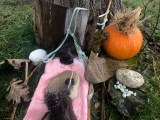
By: Diane Kashin, Ed. D, RECE. I have written about early childhood education basics such as blocks, art and dramatic play before. By basics I mean that these are experiences that are essential and should be commonplace in every early learning environment both indoors and outdoors. By no means though, are these experiences simple. Rather, … Continue reading

Tagged with #ReggioPLC …
Letting Nature Take the Course: Finding Our Rhythm in Early Learning
By: Diane Kashin, Ed. D, RECE. It was in 2015 that the York Region Nature Collaborative offered the first Rhythm of Learning in Nature which is an opportunity for like-minded educators to come together to experience nature in dialogue with the Reggio Emilia Approach and influenced by forest school practices and Indigenous ways of knowing. … Continue reading
Where Have all the Projects Gone? Musings about Inquiry in Early Childhood Education
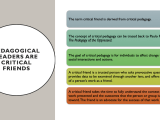
By: Diane Kashin, Ed.D, RECE and Cindy Green, BSc, RECE. We have written about our long-standing relationship in previous posts and how we connected when we were working at the same community college, teaching early childhood education, many moons ago! We became critical friends, before we knew the term. In our context, we were pedagogical … Continue reading
Responsive Relationships: Expanding Our View of Reciprocity
By: Diane Kashin, Ed. D, RECE. and Rosalba Bortolotti, RECE. What does it mean to be responsive? The dictionary defines responsiveness as acting quickly and positively. We often speak of responsive relationships in early childhood education. Our province’s early learning framework, Early Learning for Every Child Today was based on principles that included Principle 6: Knowledgeable, responsive, … Continue reading
Child-Initiated Play and Learning: Teacher-Framed Documentation and Reflection
By: Diane Kashin, Ed.D, RECE. When I began the journey to learn and understand emergent curriculum, I would not have believed that 20 years later, I would still be reflecting and wondering. Now, I know that I can never arrive at a place where I can say that I know everything that there is to … Continue reading
As Inspired by the Reggio Emilia Approach: Using Children’s Books to Invite Multiple Perspectives
By: Diane Kashin, Ed.D, RECE I have written about perspective before. Perspective is a fascinating word for it can be defined in multiple ways. Perspective is: A particular way of seeing something. To think about a situation or problem in a wise and reasonable way. To compare something to other things so it can be … Continue reading
The Environment as the Third Teacher: The Land as the First Teacher
By: Diane Kashin, Ed.D, RECE and Cindy Green, RECE. In the Reggio Emilia preschools, the space encourages encounters, communication, and relationships. Such care is taken in the preparation of the environment that it acts as a third teacher. For decades we have worked with early learning students who were required to do placements. When we … Continue reading
Early Childhood Education Rocks
By: Diane Kashin, Ed.D, RECE. The end of the year is a time to think back and reflect. Rather than considering just 2018 I decided to go way back to a time when I discovered emergent curriculum. It was twenty years ago that my quest for an alternative to themes lead to the discovery of a … Continue reading
Themes in Early Childhood Education: Will They Ever End?
By: Diane Kashin, Ed.D, RECE. It was about fifteen years ago that I embarked on a journey to research, write and defend a doctoral dissertation on emergent curriculum. I wanted to write about a topic that reflected my practice as an early childhood educator and focused on an unresolved problem. I graduated with an early … Continue reading
The Quest for the Possible: Overcoming Dubious Practices that Limit
By: Diane Kashin, Ed.D, RECE. As someone who has researched and reflected on early childhood education over many years, I have often wondered why practices that stifle creativity and agency continue. I wonder why these dubious practices are left unquestioned? I have visited countless early learning programs and wonder why from location to location the … Continue reading