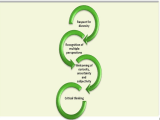
By: Diane Kashin, Ed.D, RECE. I have long been fascinated with the use of metaphors as a tool to support reflective practice. I find the idea of a wall to be particularly useful in reflecting on reflection. As a faculty advisor to ECE degree students in their final year of study, I find myself saying … Continue reading

Tagged with #reggioapproach …
From Themes to Emergent Curriculum: Facing the Resistance to Change with Kindness and Compassion
By: Diane Kashin, Ed.D, RECE. I spent a number of my formative years as an early childhood educator working in a community based child care program. I worked collaboratively with the other teachers and the administration team. We had a culture of mutual respect and I felt valued as a member of the community. However, … Continue reading
Step Away from the Photocopier: Learning through Play #nomoreworksheets
By: Diane Kashin, Ed.D, RECE. The worksheet debate rages on! Even with research and alternatives that are play-based and hands-on, their use is still being defended. The fact is worksheets are not developmentally appropriate for preschool and kindergarten. I hadn’t expected the last blog post I wrote on worksheets to be shared more widely than any … Continue reading
Negotiating Professional Learning in Place: Vygotsky Influenced Forest School
By: Diane Kashin, Ed.D, RECE. A year ago I wrote a blog post about the volunteer work I was doing with the York Region Nature Collaborative and I liken it to a dream. Last week at the Rhythm of Learning in Nature #Rhythm2015 dreams were realized, slightly altered, but nonetheless meaningful. I am so grateful for those 20+ … Continue reading
Multiplicity in Materials: Reggio Inspiration and the Knowledge of Jean Piaget
By: Diane Kashin, Ed.D, RECE. I have been reading a lot about tinkering lately. Tinkering is about hands-on experiences, learning from failures, and unstructured time to explore and invent. And through the processes of exploration and invention lies the potential for innovation. When this image appeared on my newsfeed recently, I thought back to the theorist that most influenced my practice as an … Continue reading
Emerging with Emergent Curriculum
By: Diane Kashin, Ed.D, RECE. Expertise on emergent curriculum is difficult to attain. It is like a utopian position that can never be realized. Learning about emergent curriculum is ongoing. I remind myself often that I will never get to the point in my professional career where I can say that I have reached the … Continue reading
Inspired Professional Learning in and with Nature
By: Diane Kashin, Ed.D, RECE. I have been involved in the early childhood education community in York Region, Ontario for almost three decades. Throughout this time it has been my privledge to support professional learning and training at both the pre and in-service level. I have had the opportunity to build professional relationships with many others … Continue reading
Perspectives on Reggio-inspired Practice: Making Educational Somersaults
By: Diane Kashin, Ed.D, RECE. It has been a week since I returned from Stockholm, Sweden and my visit with Suzanne Axelsson from Interaction Imagination and a year since Suzanne came to Canada and inspired so many as indicated in this blog post by Tracy Pickard. Suzanne and I became friends through social media when we found so … Continue reading
Journeys of Reggio-inspired Practice: Forging new Paths and Possibilities
By: Diane Kashin, Ed.D, RECE. Technology Rich Inquiry Based is a blog focusing on Reggio inspiration and the integration of new technologies and social media to support professional learning. It was co-constructed a number of years ago as a joint venture fuelled by the desire to share ideas and thoughts about practice and theory. For … Continue reading
Breaking New Ground in Reggio Inspired Practice: The Atelier of Nature
By: Diane Kashin, Ed.D, RECE We are – and we must be convinced of this – inside an ecosystem: our earthly journey is a journey we make along with the environment, nature, the universe. Our organism, our morality, our culture, our knowledge, our feelings are connected with the environment, with the universe, with the world. … Continue reading