By: Diane Kashin, Ed. D, RECE. and Rosalba Bortolotti, RECE. What does it mean to be responsive? The dictionary defines responsiveness as acting quickly and positively. We often speak of responsive relationships in early childhood education. Our province’s early learning framework, Early Learning for Every Child Today was based on principles that included Principle 6: Knowledgeable, responsive, … Continue reading
Tagged with Reggio Emilia Approach …
As Inspired by the Reggio Emilia Approach: Using Children’s Books to Invite Multiple Perspectives
By: Diane Kashin, Ed.D, RECE I have written about perspective before. Perspective is a fascinating word for it can be defined in multiple ways. Perspective is: A particular way of seeing something. To think about a situation or problem in a wise and reasonable way. To compare something to other things so it can be … Continue reading
The Environment as the Third Teacher: The Land as the First Teacher
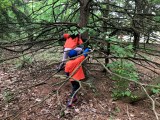
By: Diane Kashin, Ed.D, RECE and Cindy Green, RECE. In the Reggio Emilia preschools, the space encourages encounters, communication, and relationships. Such care is taken in the preparation of the environment that it acts as a third teacher. For decades we have worked with early learning students who were required to do placements. When we … Continue reading
On Being Mindful, Grateful and Joyful: It Matters!
By: Cindy Green, RECE (with contributions from Diane Kashin, Ed.D, RECE). As an antidote to the last blog post where there was focus on ranting while reflecting on words that cause agitation Cindy offers some thoughts on being mindful, grateful and joyful. Then as promised there will be a return to the ranting as this … Continue reading
Beyond Description: Making Professional Knowledge Visible through Pedagogical Documentation
By: Diane Kashin, Ed.D, RECE (with contributions from Cindy Green, RECE). This blog post has been ruminating with me for some time now. The process of pedagogical documentation is a new concept to many early childhood educators. According to Dahlberg and Moss (2008) “pedagogical documentation has its origins in the innovative and, today, world-famous municipal early childhood services in … Continue reading
Playing and Learning Outdoors: Building Capacity in the Early Years
By: Diane Kashin, Ed.D, RECE. I have made this confession before – when I worked directly with children I did not embrace outdoor play and learning. I could have never imagined that as retirement is looming over the horizon that I would be advocating for outdoor play and learning. I am volunteering with the York Region … Continue reading
The Return to Reggio: The Journey Continues
By: Diane Kashin, Ed.D, RECE. In less than one week’s time I will be on the road to Reggio Emilia, in north central Italy. This will be my third and maybe the last time I participate in a study tour. Reggio Emilia is home to what are considered the best preschools in the world. According to … Continue reading
The Back to Basics Conundrum in Early Learning: Reflecting on the Past to Move us Forward
By: Diane Kashin, Ed.D, RECE. Recently, a kind and sharing early childhood educator posted my blog, Pedagogical Documentation: Why? When? Who? What? Where? How? on a Facebook group for Reggio-inspired educators. Since she tagged me, I looked and saw that it immediately garnered a comment. “Basic” was all she wrote. I replied “it was meant to be” … Continue reading
The Links between Literacy, Nature and the Principles of the Reggio Emilia Approach
By: Diane Kashin, Ed.D, RECE. When I was asked to present a workshop that focused on the links between literacy, nature and the Reggio Emilia Approach at the Reading for the Love of It conference I was thrilled as I have a passion for all three. I knew I needed to start with the principles. … Continue reading
The Image of the Child: Rich in Play Possibilities
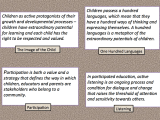
By: Diane Kashin, Ed.D, RECE. Loris Malaguzzi reminds us that our image of the child is where teaching should begin. As many of us are beginning a new school year, examining our images of children is a good way to start thinking about our practices and journeys. The image of the child is also a great … Continue reading