By: Diane Kashin, Ed.D, RECE. As someone who has researched and reflected on early childhood education over many years, I have often wondered why practices that stifle creativity and agency continue. I wonder why these dubious practices are left unquestioned? I have visited countless early learning programs and wonder why from location to location the … Continue reading
Tagged with pedagogical documentation …
The Back to Basics Conundrum in Early Learning: Reflecting on the Past to Move us Forward
By: Diane Kashin, Ed.D, RECE. Recently, a kind and sharing early childhood educator posted my blog, Pedagogical Documentation: Why? When? Who? What? Where? How? on a Facebook group for Reggio-inspired educators. Since she tagged me, I looked and saw that it immediately garnered a comment. “Basic” was all she wrote. I replied “it was meant to be” … Continue reading
Invitations, Provocations and Reflective Practice
By: Diane Kashin, Ed.D, RECE. When I first began teaching early childhood education about three decades ago, there were many discussions about the language that we use to name what we do. I remember that our conversations related to moving away from using the term, “activities”. At the time, early learning teachers were setting up activities … Continue reading
The Progression towards Pedagogical Documentation
By: Diane Kashin, Ed.D, RECE. Pedagogical documentation can be viewed as a “process to explore all of our questions about children” (Ministry of Education, 2014, p. 21). It is a slow process that requires time but above all it needs to become a mindset – a habit of practice. Documentation becomes pedagogical when it is interpreted … Continue reading
What about the What? Finding the Deeper Meaning in Pedagogical Documentation
By: Diane Kashin, Ed.D, RECE. To begin with I would like to wish all the followers and readers of this blog a very HAPPY NEW YEAR! A new year is the time for reflection and resolutions. For me, 2017 will be the year that I continue my quest to make meaning from the theory and practice … Continue reading
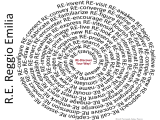
The ReWord Challenge: Reflecting on the Principles and Philosophy of the Reggio Emilia Educational Project
By: Diane Kashin, Ed.D, RECE. On August 11th, 2016, I helped organize a workshop attended by 100 educators: Global Perspectives on Reggio-inspired Practice in Context: Global Perspectives. There were four presentations, two of which represented a United Kingdom context, Debi-Keyte–Hartland and Hayley Peacock from Little Barn Owls Day Nursery and Farm School. Suzanne Axelsson, a preschool … Continue reading
Accepting the Gift of Time in the Process of Pedagogical Documentation
By: Diane Kashin, Ed.D, RECE. With the fullness of time, I have begun to go deeper in my understanding of the process of documentation that is pedagogical. Time is a gift I was given during the week that was The Rhythm of Learning in Nature 2016. In the inaugural season of #Rhythm2015, my gift for … Continue reading
Inspiring Spaces: Risk, Choice and Playful Learning
By: Cindy Green B.Sc., RECE. I am grateful to my long time friend and colleague, Diane Kashin for inviting me to accompany her on a journey to present in, and visit Adelaide, South Australia. Upon return from our adventures there are so many experiences that we continue to reflect on regarding the multiples perspectives evident in … Continue reading
Visual Reflections: A Language of Documentation and Collaborative Professional Learning
By: Diane Kashin, Ed.D, RECE. This will be the first of a series of blog posts about the recent experience in Adelaide, South Australia shared with my friend and colleague, Cindy Green. We were brought to this beautiful, remarkable city to present a series of four workshops for EChO, the Early Childhood Organization of South Australia. We … Continue reading
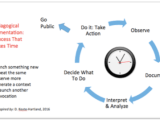
Below the Surface there is so Much More: The Early Learning Programming Cycle
By: Diane Kashin, Ed.D, RECE. There is almost nothing I like better talking about than emergent curriculum. It comes up a lot in workshops and classes that I teach and there seems to be some misunderstanding. The approach does require intentional teaching; it is not a “free for all”. It also requires consideration and thought about … Continue reading