By: Diane Kashin, Ed.D, RECE. One of the benefits of embarking on a journey of self-directed professional learning is the unexpected consequences of stepping outside your comfort zone. Four years ago, I was pushed into a state of disequilibrium by a group of students who encouraged me to take a look inside the unfamiliar world … Continue reading
Tagged with education …
Playing and Learning: Our Second Nature
By: Diane Kashin, Ed.D, RECE. Looking at the photo below, that my cousin sent me recently, I found myself thinking about the past and my early outdoor play and learning experiences. I remember as a very young child having great times playing outside without structure and without supervision – making mud pies, playing in the … Continue reading
Buttons as Loose Parts: The Intersection of Play and History
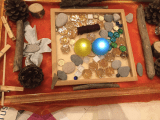
By: Diane Kashin, Ed.D, RECE. As I child I remember playing with my mother’s button collection, dipping my hand in, smooshing them about, dumping them on the floor of my bedroom and then playing for hours. Sometimes, I counted them, or sorted them, but I also remember creating elaborate stories with the buttons representing different … Continue reading
The Colour of Learning: A Reflection on Reggio, Constructivism and Provocations
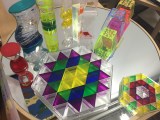
By: Diane Kashin, Ed.D, RECE. Recently, I have been provoked to think and reflect about colour. I have always known that colour impacts learning and that there is a psychology behind colours. Having just moved into a new townhome that I waited two years for the builder to finish, I spent considerable time thinking about the colour … Continue reading
The Environment as the Third Teacher: An Integral Part of How Learning Happens
By: Diane Kashin, Ed.D, RECE. One of the aspects of my work in early childhood education that I am grateful for is the opportunity to visit programs for children, both indoors and outdoors, from infant and toddler spaces, to preschool and kindergarten classes, to classes for grades one, two and three, as well as before … Continue reading
Reframing and Renaming What We Do and Who We Are: Early Childhood Education in the 21st Century
By: Diane Kashin, Ed.D, RECE. Four years ago, I entered the realm of social media for the purposes of professional learning. It has been an amazing experience as I have expanded my knowledge, my network and I am in a constant state of cognitive dissonance which I embrace! Recently, a Facebook friend posted on the … Continue reading
Models and Approaches to Early Learning: Where is the Play and Inquiry?
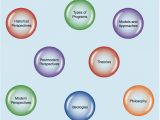
By: Diane Kashin, Ed.D, RECE. There are many perspectives on philosophies and theories and how they should guide early learning practice. Program models and approaches have been been influenced by historical, contemporary, and postmodern views of children, families, and learning. The many program models and approaches in practice in the early learning world are complex in … Continue reading
Emergent Curriculum: Taking Interests to the Next Realm – Cultivate rather than Follow
By: Diane Kashin, Ed.D, RECE. I have written about interests in an earlier blog post. I find interest-based teaching and learning to be so interesting! My interest propels me to think deeply and explore resources and ideas about interests. While some may think that interest-based education is a new concept, it is firmly rooted in the past, as … Continue reading
Negotiating Professional Learning in Place: Vygotsky Influenced Forest School
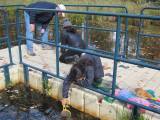
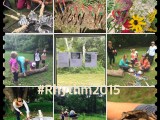
By: Diane Kashin, Ed.D, RECE. A year ago I wrote a blog post about the volunteer work I was doing with the York Region Nature Collaborative and I liken it to a dream. Last week at the Rhythm of Learning in Nature #Rhythm2015 dreams were realized, slightly altered, but nonetheless meaningful. I am so grateful for those 20+ … Continue reading
Breaking New Ground in Reggio Inspired Practice: The Atelier of Nature
By: Diane Kashin, Ed.D, RECE We are – and we must be convinced of this – inside an ecosystem: our earthly journey is a journey we make along with the environment, nature, the universe. Our organism, our morality, our culture, our knowledge, our feelings are connected with the environment, with the universe, with the world. … Continue reading