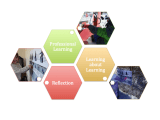
By: Diane Kashin, Ed.D, RECE. As 2016 comes to a close I am reflecting back on the many workshops that I facilitated and the keynotes that I presented. It has been an incredibly busy but reassuring year to realize that early childhood educators are serious about professional learning and committed to changing practices. Moving away … Continue reading
Tagged with education …
Not all Documentation is Pedagogical Yet – and that’s Okay!
By: Diane Kashin, Ed.D, RECE. Ontario’s pedagogy for the early years: How Does Learning Happen (2014) is considered a pedagogical document. It suggests a number of pedagogical approaches to “nurture learning and development in the early years” that includes “using pedagogical documentation as a means to value, discuss and make learning visible” (p. 16). In my … Continue reading
Loose Parts Outside for Adventurous Play!
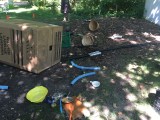
By: Diane Kashin, Ed.D, RECE. I love loose parts. I love playing with loose parts and sharing loose parts with other educators. My hope is when adults mess about with loose parts that there will be recognition of the possibilities and importance of loose parts provision for children. I have presented many loose parts workshops indoors. … Continue reading
The Missing Link: Teacher Research and the Reggio Emilia Educational Project
By: Diane Kashin, Ed.D, RECE. I have been reflecting on the principles and philosophy of the Reggio Emilia Educational Project but I am going to make a concerted effort not to label my reflections as Reggio inspired. Yes, it is true, for many years, I have found the work of educators from Reggio inspiring but I … Continue reading
The ReWord Challenge: Reflecting on the Principles and Philosophy of the Reggio Emilia Educational Project
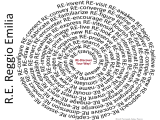
By: Diane Kashin, Ed.D, RECE. On August 11th, 2016, I helped organize a workshop attended by 100 educators: Global Perspectives on Reggio-inspired Practice in Context: Global Perspectives. There were four presentations, two of which represented a United Kingdom context, Debi-Keyte–Hartland and Hayley Peacock from Little Barn Owls Day Nursery and Farm School. Suzanne Axelsson, a preschool … Continue reading
Now Trending in Early Childhood Education: Nature!
By: Diane Kashin, Ed.D, RECE. Over the many years that I have been an early childhood educator, I have been fascinated with developing trends. I always found it very interesting to reflect on what topics are being written about and spoken about the most. A trend in fashion, can be something that comes and goes. What … Continue reading
Inspiring Spaces: Risk, Choice and Playful Learning
By: Cindy Green B.Sc., RECE. I am grateful to my long time friend and colleague, Diane Kashin for inviting me to accompany her on a journey to present in, and visit Adelaide, South Australia. Upon return from our adventures there are so many experiences that we continue to reflect on regarding the multiples perspectives evident in … Continue reading
Buttons Connect in Reggio-Inspired Practice
By: Diane Kashin, Ed.D, RECE. Many, many years ago, when I discovered emergent curriculum and specifically the Project Approach I was teaching early childhood education at a large community college. I wanted my students to understand how a topic worthy of further investigation can emerge from hands on experience. I wanted the topic to be something … Continue reading
Reggio-inspired Practice in Context: Seeking Multiple Perspectives
By: Diane Kashin, Ed.D, RECE. I have had the good fortune of visiting Reggio Emilia, Italy and participating in two study tours. I have also travelled to Sweden and to Colorado to see how inspiration from Reggio Emilia has been interpreted in those contexts. I am eagerly anticipating a trip to Adelaide, South Australia to visit schools … Continue reading
Below the Surface there is so Much More: The Early Learning Programming Cycle
By: Diane Kashin, Ed.D, RECE. There is almost nothing I like better talking about than emergent curriculum. It comes up a lot in workshops and classes that I teach and there seems to be some misunderstanding. The approach does require intentional teaching; it is not a “free for all”. It also requires consideration and thought about … Continue reading