By: Diane Kashin, Ed.D, RECE. I have had the good fortune of visiting Reggio Emilia, Italy and participating in two study tours. I have also travelled to Sweden and to Colorado to see how inspiration from Reggio Emilia has been interpreted in those contexts. I am eagerly anticipating a trip to Adelaide, South Australia to visit schools … Continue reading

Below the Surface there is so Much More: The Early Learning Programming Cycle
By: Diane Kashin, Ed.D, RECE. There is almost nothing I like better talking about than emergent curriculum. It comes up a lot in workshops and classes that I teach and there seems to be some misunderstanding. The approach does require intentional teaching; it is not a “free for all”. It also requires consideration and thought about … Continue reading
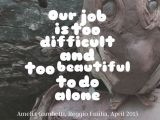
Quotes to Provoke Reggio-inspired Teaching and Learning
By: Diane Kashin, Ed.D, RECE. Teaching cannot be separated from learning in Reggio-inspired practice. I am very fortunate to have the opportunity to work with educators at various stages of their journey and while I am often teaching, I am always learning. Recently, during the second of a series of eight sessions with 100 educators … Continue reading
Learning Stories: The Power of Narrative Inquiry
By: Diane Kashin, Ed.D, RECE. I have been thinking about pedagogical documentation and specifically learning stories. Learning stories are based on the work of Dr. Margaret Carr and Wendy Lee of New Zealand. I first heard about learning stories about ten years ago at a conference that featured Margie Carter and Deb Curtis from Harvest Resources … Continue reading
A Thinking Continuum: A Search for Complexity in Early Childhood Education Practice
By: Diane Kashin, Ed.D, RECE. Pondering about early learning is something that I do on a regular basis. Usually what motivates me are stories from colleagues and friends or posts shared on Facebook, Twitter or Pinterest, as most of my friends and followers on social media are educators. I could talk for hours with anyone … Continue reading
Creative and Critical Thinking: Documentation meets the Digital Age
By: Diane Kashin, Ed.D, RECE. One of the benefits of embarking on a journey of self-directed professional learning is the unexpected consequences of stepping outside your comfort zone. Four years ago, I was pushed into a state of disequilibrium by a group of students who encouraged me to take a look inside the unfamiliar world … Continue reading
Playing and Learning: Our Second Nature
By: Diane Kashin, Ed.D, RECE. Looking at the photo below, that my cousin sent me recently, I found myself thinking about the past and my early outdoor play and learning experiences. I remember as a very young child having great times playing outside without structure and without supervision – making mud pies, playing in the … Continue reading
Buttons as Loose Parts: The Intersection of Play and History
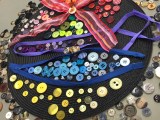
By: Diane Kashin, Ed.D, RECE. As I child I remember playing with my mother’s button collection, dipping my hand in, smooshing them about, dumping them on the floor of my bedroom and then playing for hours. Sometimes, I counted them, or sorted them, but I also remember creating elaborate stories with the buttons representing different … Continue reading
Digital Documentation: Making Teaching and Learning Visible
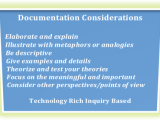
By: Diane Kashin, Ed.D, RECE. Making teaching and learning visible has been a cornerstone of Reggio inspired practice for some time. In Ontario, there is increasingly an expectation that early learning professionals engage in pedagogical documentation, the process that makes visible teaching and learning. The problem for early childhood educators, specifically, is time. In a long and … Continue reading
The Colour of Learning: A Reflection on Reggio, Constructivism and Provocations
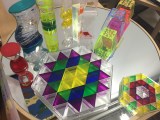
By: Diane Kashin, Ed.D, RECE. Recently, I have been provoked to think and reflect about colour. I have always known that colour impacts learning and that there is a psychology behind colours. Having just moved into a new townhome that I waited two years for the builder to finish, I spent considerable time thinking about the colour … Continue reading