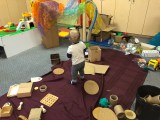
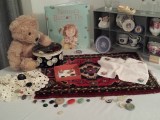
By: Diane Kashin, Ed.D, RECE. Dramatic play is one of the most important forms of play (Smilansky & Shefatya, 1990). Children enjoy and will do it spontaneously. It supports them in combining their ideas and thoughts to bring meaning to their world. If dramatic play is missing or not encouraged, an important piece of childhood … Continue reading
Filed under Emergent Curriculum …
Messing About with Messy Play: Messy Maths and More
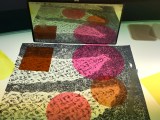
By: Diane Kashin, Ed.D, RECE. Years ago, I was profoundly influenced by the legacy of Frances and David Hawkins. David Hawkins along with his wife Frances, an early childhood educator, were “committed to the idea that in order to best serve children, teachers need to be dedicated learners as well” (Lynch, Shaffer, & Hall, 2009, … Continue reading
Playing and Learning Outdoors: Building Capacity in the Early Years
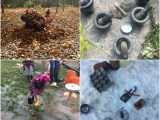
By: Diane Kashin, Ed.D, RECE. I have made this confession before – when I worked directly with children I did not embrace outdoor play and learning. I could have never imagined that as retirement is looming over the horizon that I would be advocating for outdoor play and learning. I am volunteering with the York Region … Continue reading
Reggio-inspired Curious Contexts of Experience
By: Diane Kashin, Ed.D, RECE. It has been a few weeks since my return to Reggio and I am still processing the experience. The opportunity to spend a week in this historically beautiful environment with others on the 2018 Canadian Study Tour was one that I will always cherish and hold close to my heart. … Continue reading
The Return to Reggio: The Journey Continues
By: Diane Kashin, Ed.D, RECE. In less than one week’s time I will be on the road to Reggio Emilia, in north central Italy. This will be my third and maybe the last time I participate in a study tour. Reggio Emilia is home to what are considered the best preschools in the world. According to … Continue reading
Blocks, Blocks and more Blocks: Essential Materials for Play and Learning
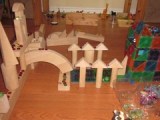
By: Diane Kashin, Ed.D, RECE. Building on my last blog post – The Back to Basics Conundrum in Early Learning: Reflecting on the Past to Move us Forward this post is about one of the most basic and essential elements of early childhood education … BLOCKS! Blocks can be defined as visual-spatial construction play objects; materials that … Continue reading
The Back to Basics Conundrum in Early Learning: Reflecting on the Past to Move us Forward
By: Diane Kashin, Ed.D, RECE. Recently, a kind and sharing early childhood educator posted my blog, Pedagogical Documentation: Why? When? Who? What? Where? How? on a Facebook group for Reggio-inspired educators. Since she tagged me, I looked and saw that it immediately garnered a comment. “Basic” was all she wrote. I replied “it was meant to be” … Continue reading
Emergent Curriculum Across the Seasons: Let Nature be the Invitation
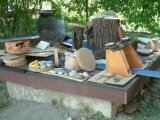
By: Diane Kashin, Ed.D, RECE. Curriculum can emerge from outdoor play experiences in wondrous and authentic ways. The changing seasons offer invitations for learning that cannot be duplicated indoors. Curriculum can and should emerge from nature. It is in nature that children’s interests will be piqued. Whether it be building snow forts in the winter, puddle … Continue reading
Story Tables: Supporting Literacy and Professional Learning in Early Childhood Education
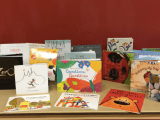
By: Diane Kashin, Ed.D, RECE. and Cindy Green, BSc, RECE. One of the most significant professional learning experiences that we have engaged in during the last few years was our trip to Adelaide, South Australia. While there to present workshops focused on the possibilities of buttons as loose parts and the beauty of agates as materials to … Continue reading
Lines in the Sand in ECE: Where do you Draw the Line?
By: Diane Kashin, Ed.D, RECE. and Cindy Green, BSc, RECE. This is the third in a series of blogs written about a leadership research project that we are working on with Upper Canada Child Care Centres. In the first post we introduced the research project. In the second post we reflected on reflection as an important process essential to … Continue reading